
East Africa · Portfolio essay
The Zebra in the Road
A safari track, an unhurried animal and the awkward business of being a visitor in someone else's world.
Written by Paul Wakefield · 2 min read
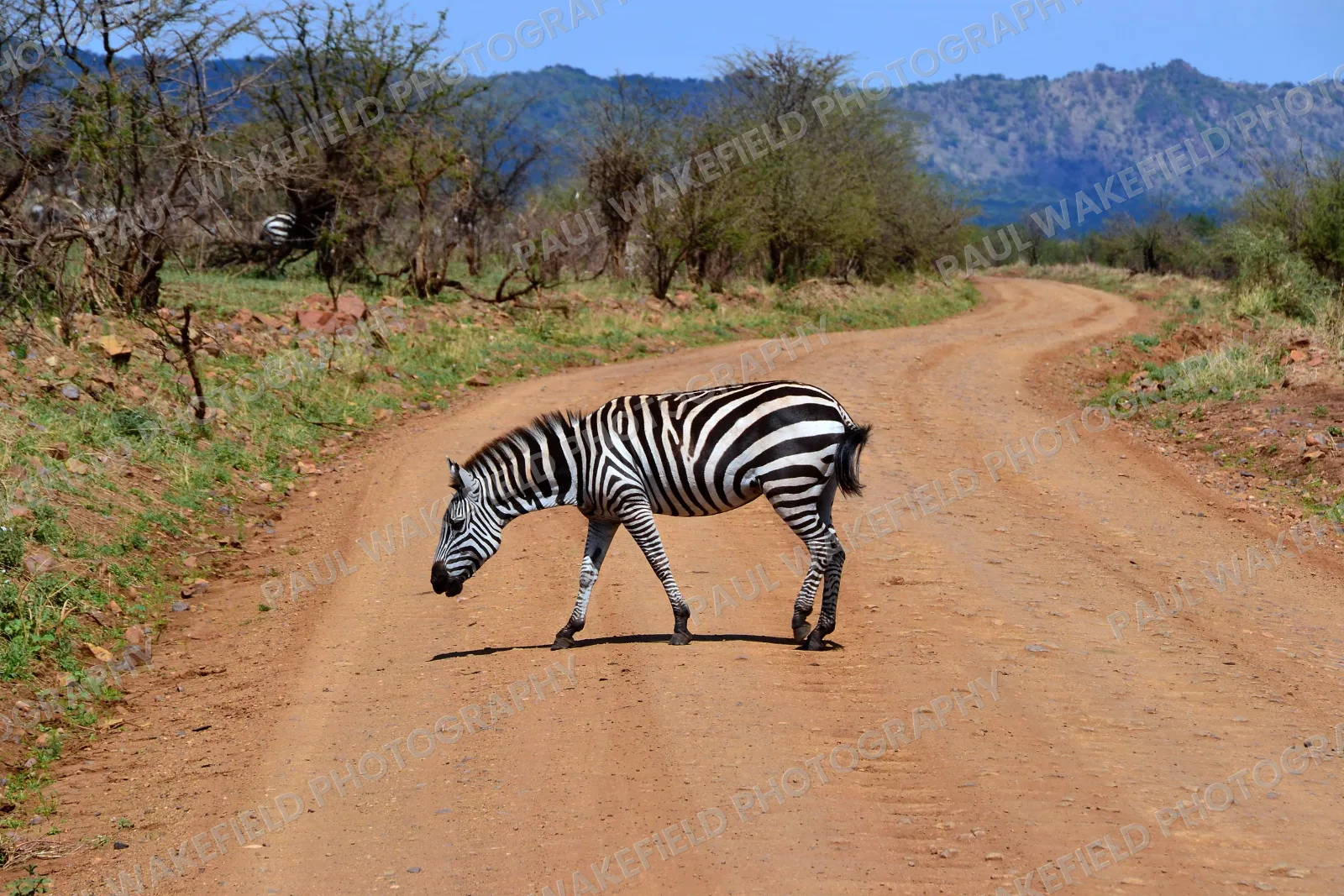
The zebra has no interest in the photograph.
That is its first advantage. The second is that it occupies the road, while the people who have travelled a very long way to see it must wait.
In a safari photograph, this can look like a small inconvenience: an animal in the foreground, a muddy track, a vehicle temporarily delayed. But the arrangement deserves a longer look. The track has carried people into the animal's landscape. It has not made the landscape theirs.
There is something quietly comic about the encounter. Inside the vehicle are charged batteries, spare memory cards, carefully researched itineraries and expensive expectations. Outside is an animal getting on with its day. The zebra does not know which lens is attached. It will not turn its head because someone is ready.
Travel rarely exposes our habits so efficiently. We arrive with lists and begin measuring the world against them. A lion would improve the morning. Better light would improve the lion. A closer position would improve the light. Even pleasure can become a sequence of proposed corrections.
Then an ordinary animal stands in the road and refuses to be improved.
Look at it without reaching immediately for the next sighting. Follow the clean division between a stripe and its neighbour, the weight carried through a slender leg, the dark muzzle lowered towards the ground. Around it, notice what the first glance discarded: the churned surface of the track, the grass beyond it, the room between one animal and another.
The photograph begins to change. It becomes less about collecting a zebra and more about recording a relationship: a human route passing through a place where human wishes have limited authority.
Eventually, the animal may move. The vehicle can continue. Someone will check the picture, someone else will scan the distance, and the search will resume.
But for a moment the hierarchy has been unusually clear. The visitor waited. The resident decided when the road was free.