East Africa · Portfolio essay
The Old Bull Takes the Road
When a big tusker walks your way, everything else on the plain goes quiet.
Written by Paul Wakefield · 3 min read
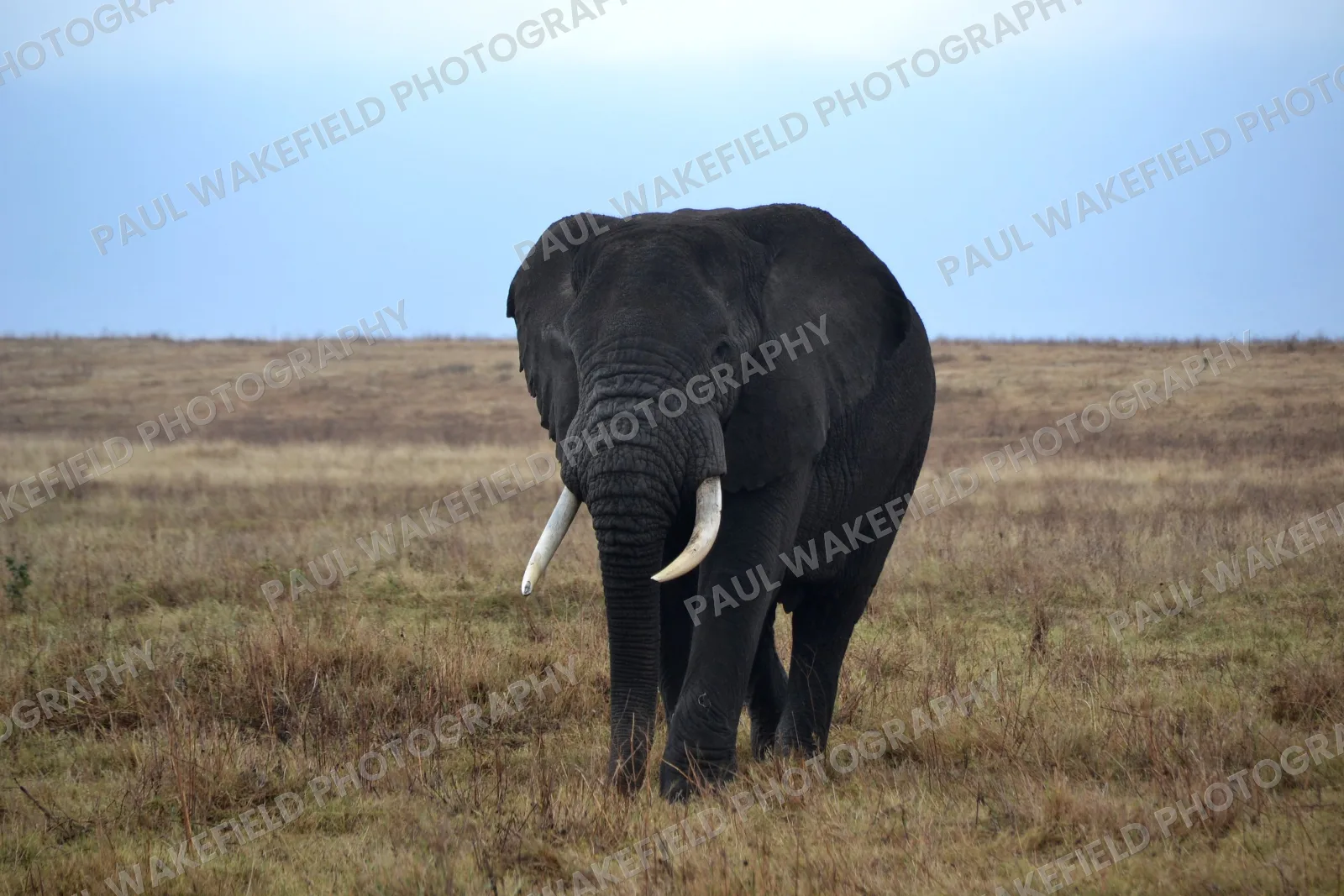
He stands alone on the open plain, facing you. Two long white tusks curve out in front of him.
A big tusker. And there is nothing between you and him but dry grass and air.
He is enormous. Not big like a lorry. Big like a hill that has decided to move.
The plain around him is flat and gold and empty, stretching all the way to the horizon. The sky is blue and wide. And in the middle of all that space, this one grey giant.
He stands there, calm and certain. In no rush at all. Nobody has hurried this elephant in his life.
You can hear the dry grass rustle in the wind.
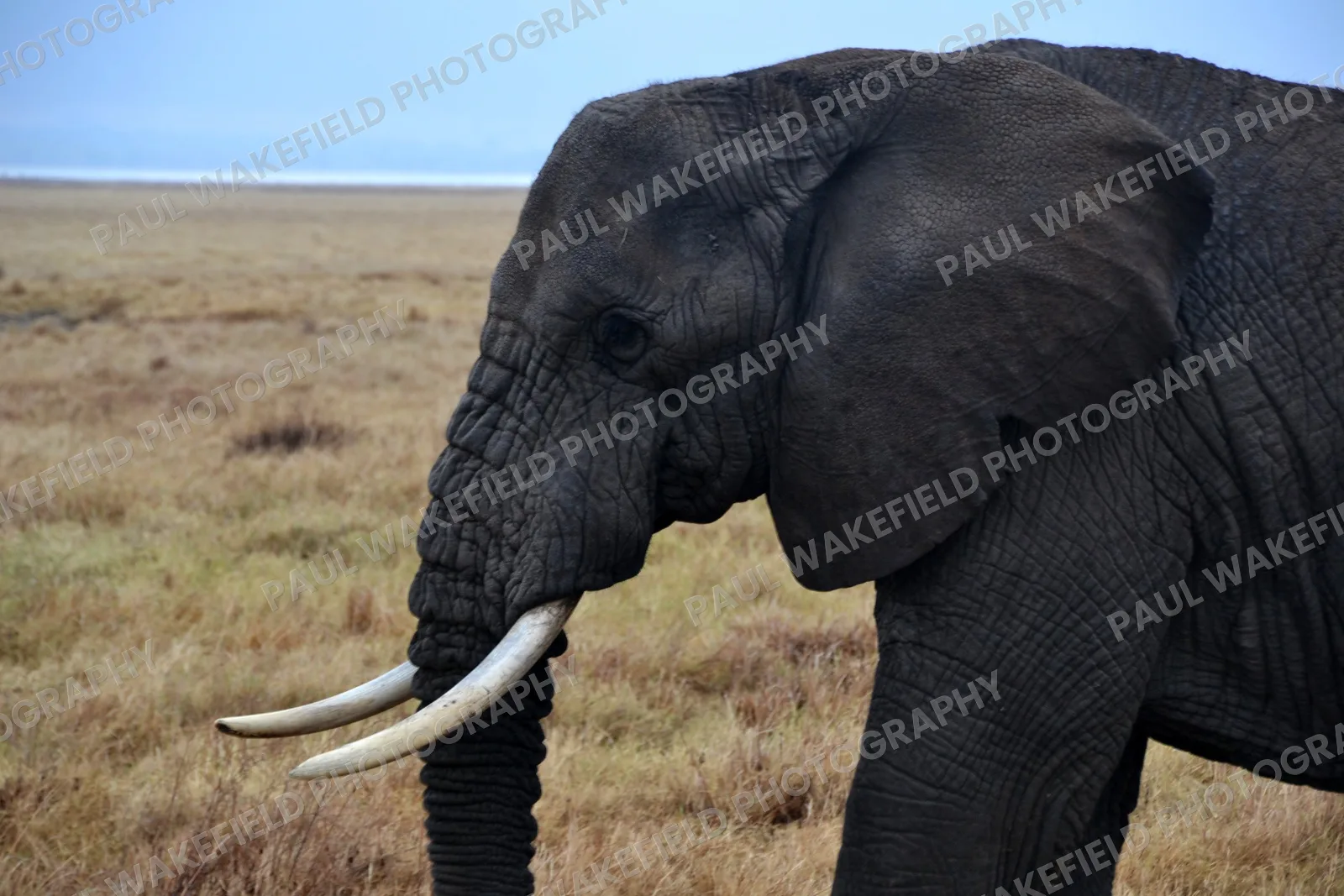
Now he turns, side on, and you see him properly. The skin is a map. Deep cracks and folds and wrinkles, dark grey and dusty, running in every direction. The ear is huge, hanging like a heavy curtain. The eye is small and dark and wise. And those tusks. Thick at the base, smooth and creamy white, curving out and up into points.
They look ancient. Like something carved.
Close up, he fills the whole frame. His ear flaps once. You realise you are holding your breath again.
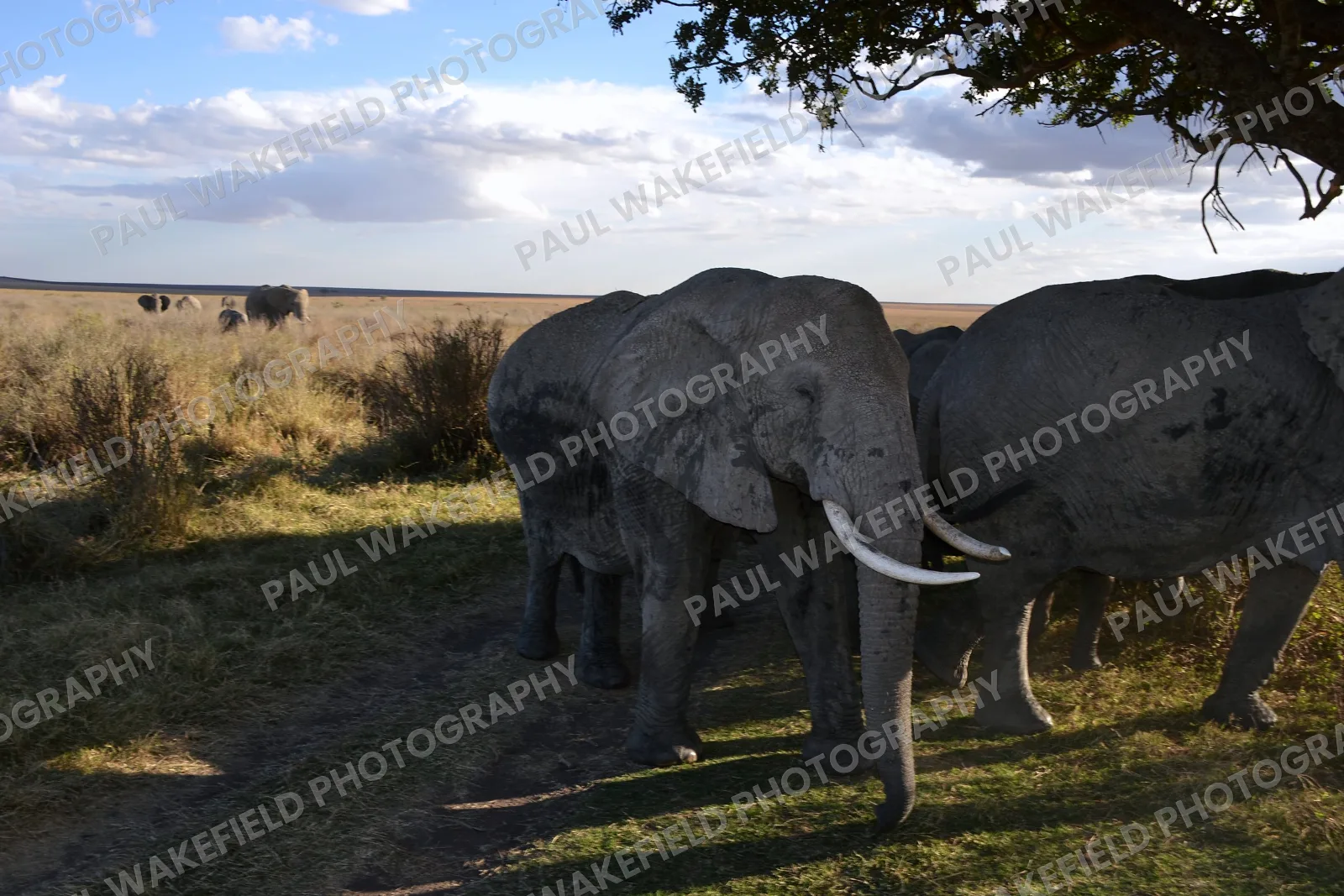
Later, in a patch of shade under a big tree, the big bulls stand together. Tusks shining. Doing absolutely nothing in the heat of the day. Far behind them, other animals graze on the plain.
Out here elephants are not part of the scenery.
They are the scenery.
You drive away slowly, and you keep looking back over your shoulder. He does not look back at you. Why would he? This is his plain. You were only passing through.
But you will carry him home with you all the same.
So why does this photo work?
Space. That single elephant, standing in all that open plain, tells you everything about how big this place is. Your eye goes straight to the tusks, white against the grey. Then up to the face. Then out across the endless grass to the horizon.
It is calm and powerful at the same time. That is a rare thing for one picture to do.
The close up works for a different reason. Texture. You want to reach out and touch that skin.
Imagine the lone tusker as a long panoramic print in a hotel lobby, the kind guests photograph on their phones. Imagine the close up on a feature wall in a restaurant or private dining room. Imagine either one leading a campaign about heritage, strength or anything built to last.
These are pictures with weight.
And if you have never stood near a wild elephant, you have a treat waiting. Go on safari in East Africa. Find the open plains. Wait for a grey shape on the horizon.
Then watch it get bigger.
Bring this kind of presence into your lobby. These photos are ready to license.
Looking for words with real weight behind them? Hire Paul as your writer.
More stories
See the photos